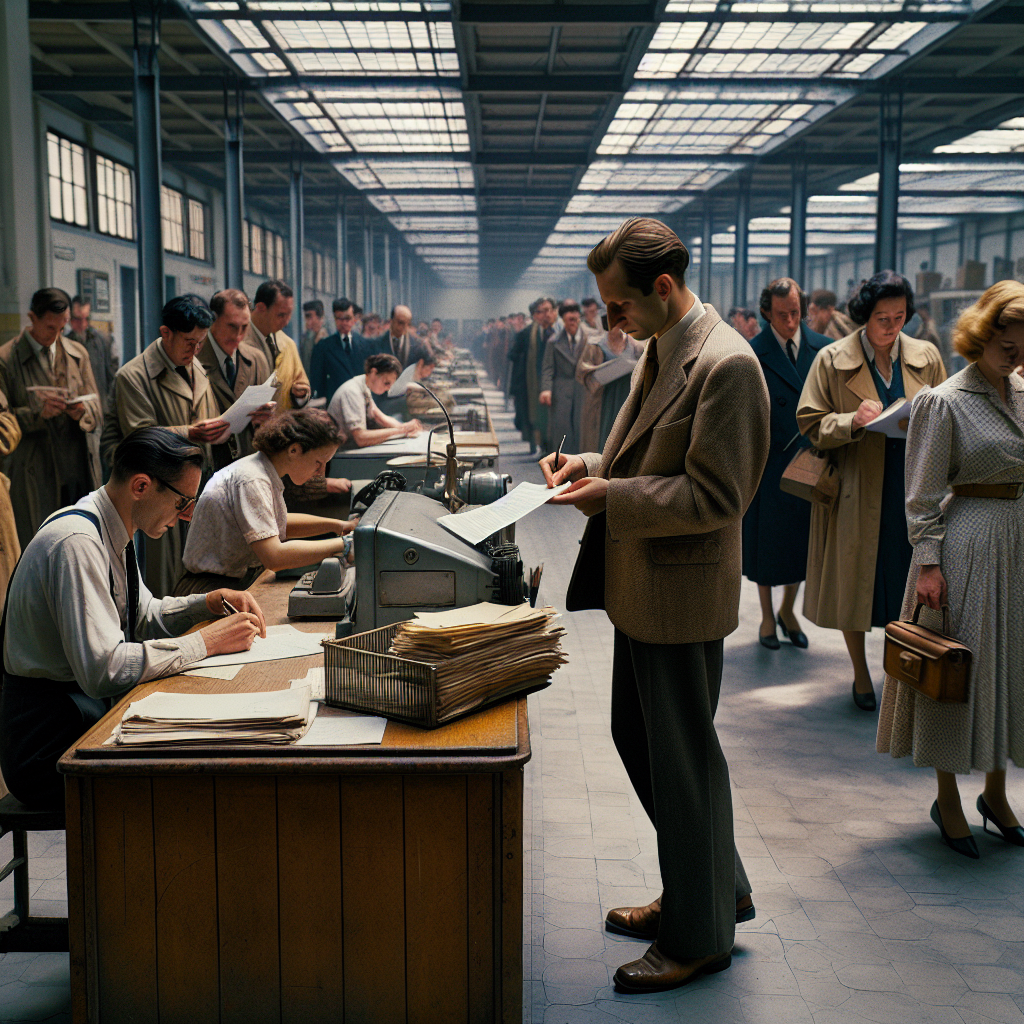
Reality sometimes surpasses fiction, especially when one finds oneself caught in the nets of a Kafkaesque administration. Mr. Dupont’s obstacle course offers a striking account of these bureaucratic absurdities.
In the surreal world of French administration, Mr. Dupont takes on the role of the unfortunate protagonist and goes through a series of events that, while completely ordinary, are made absurd by the complex and inconsistent nature of administrative processes.
It all starts with a simple request to change his address. Simple in appearance, for behind this innocuous act hides a labyrinth of forms and procedures, not to mention endless waits. Each document seems to require its counterpart, which in turn requires another document, thus creating an endless loop. The reference to Kafka, a 20th-century author famous for his descriptions of absurd situations and bureaucratic oppression, seems all too fitting.
Mr. Dupont’s disorientation reaches its peak when he learns that the form needed to confirm his address change can only be obtained if he has already changed his address. An administrative paradox that leaves him perplexed, with a feeling of going in circles. “I found myself in a dead end, like a character from Kafka, trapped in an endless story of paperwork,” he ironically confesses.
Mr. Dupont’s story is symptomatic of what many citizens experience when facing administrative complications. Kafkaesque inconsistencies, far from being the hallmark of exceptional situations, are often the norm rather than the exception. In the end, Mr. Dupont did manage to get his address changed, but the sense of absurdity lingers.
In the name of administrative simplification and efficiency, it’s time to rethink our processes and procedures, to strip them of their Kafkaesque character and make them more accessible to citizens. As Mr. Dupont points out: “Simplicity should be the guiding principle, not complexity”. A made-up quote perhaps, but full of common sense.







Be First to Comment