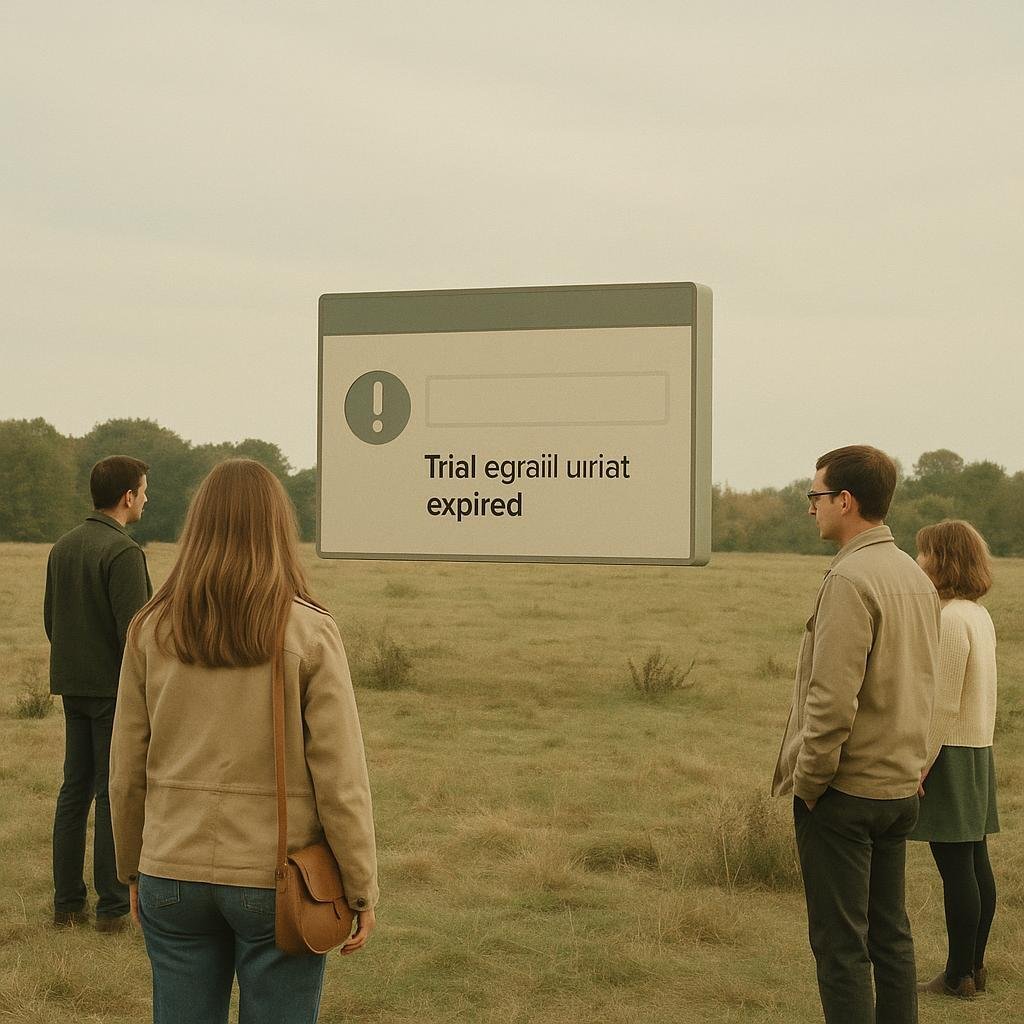
This morning, an overnight update blacked out the city’s smart windows for non-premium accounts.
Between “mandatory joy” notifications and sidewalks showing 73% progress, the daily routine flipped to beta mode.
At dawn, entire facades remained opaquely tinted, requiring a QR-smile to let in natural light. The Ciel+ app offered a temporary unlock of the sunrise for a per-minute micropayment, while watches dictated the “compliant” heart rate to avoid a mood penalty. At crosswalks, you now have to solve a rebus captcha to get the green light: “Select all squares where you see an existential doubt.”
Households weren’t spared. Predictive refrigerators sent warnings for “unplanned emotional ingestions,” relabeling yogurts as “compensation snacks” whose opening triggers a moralizing podcast. Vacuum cleaners, switched to influencer mode, livestream the dust and offer “dirty-floor nostalgia” filters. In open-plan offices, keyboards charge per keystroke for words deemed “underperforming,” automatically replacing “break” with “silent optimization.”
“We don’t force anyone; serenity is simply the default option that costs a little more,” says Mireille K., Chief Silence Officer at SereniCorp. “And your conversations aren’t being listened to; they’re remastered in 4D to improve the quality of the memory.” For its part, the Humance platform has launched CalmPush: if a face doesn’t display 7 seconds of certified smiling, a soothing ad is pushed to neighbors’ headphones “to maintain the social ecosystem.”
Amid the frenzy, some are organizing into analogist clubs: they collect offline shadows, write lists on paper to throw off the algorithms, and learn to whistle passwords that no longer open anything. Tomorrow, several firms will present Human Airplane Mode, a feature promising 48 hours of emotion savings, with remorse charger not included. “Only two updates left until simplicity,” the screen promises. Then it restarts.






Be First to Comment