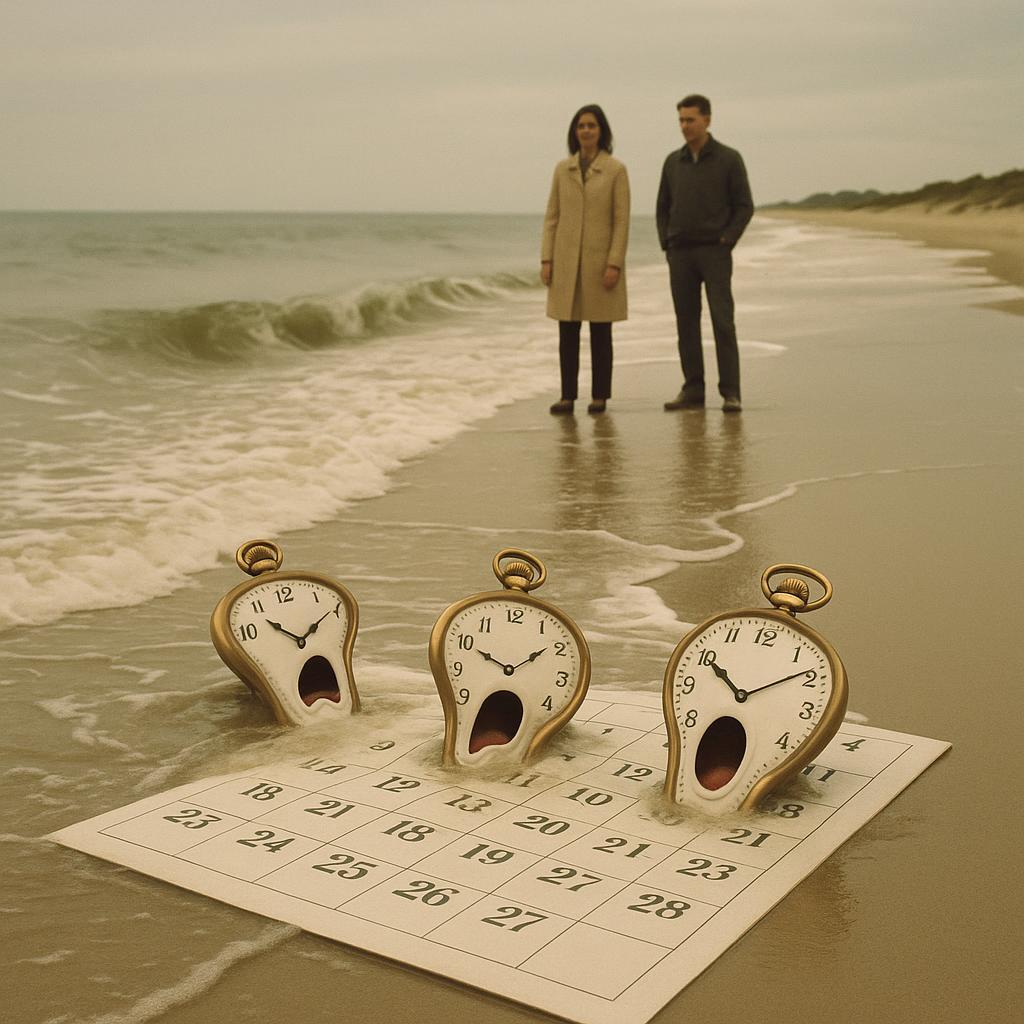
This morning, the city rose with chocolate hours and meowing minutes.
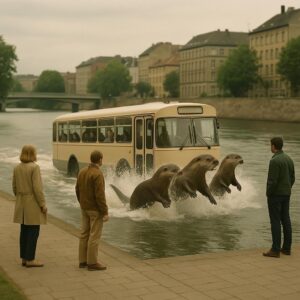
No one knew where to put the sea, which had slipped out of its frames to sleep on the rooftops.
At dawn, a wave of tepid time spilled out of the chimes, glazing the sidewalks with clocked honey. The balconies, seized by a lithe slowness, stretched until they tickled the belfry bell, while the staircases learned to go down backwards. Hats were seen sitting by themselves on benches to listen to the breathing of suitcases, and mustaches of shadow climbed up the windows like midnight vines.
In the square, the lampposts sipped the puddles of moonlight through straws, and three elephants with threadlike legs balanced across the dust, carrying obelisks of foam toward a crumpled horizon. A spiral-horned rhinoceros, adorned with lace, grazed the word “tomorrow” off a poster of mist; immediately, the calendar began to lay mother-of-pearl buttons. The houses, jealous, opened drawers in the sky to put away their dreams, still warm.
“I drink the hour the way one bites into a star, and it answers me with the scent of a cosmic beignet,” confided Madame Consuelo des Sables, keeper of the Phonoscope of the Port-of-Dreams, carefully wringing a cloud into a saucer. “When time melts, it becomes audible: it clinks under the tongue, then it laughs, long, very long, with legs.”
In a slow and polished catastrophe, watchmakers in seaweed aprons stretched clotheslines between two bell towers to dry the seconds, while the bakers kneaded dawns stuffed with silence. It is promised that at noon, if noon consents not to yawn, everything will return more or less askew: the sea will take back its frame, the minutes will slip back into their pockets, and the day, gently mislaid, will stretch out under a parasol of sand to forget to finish.





Be First to Comment