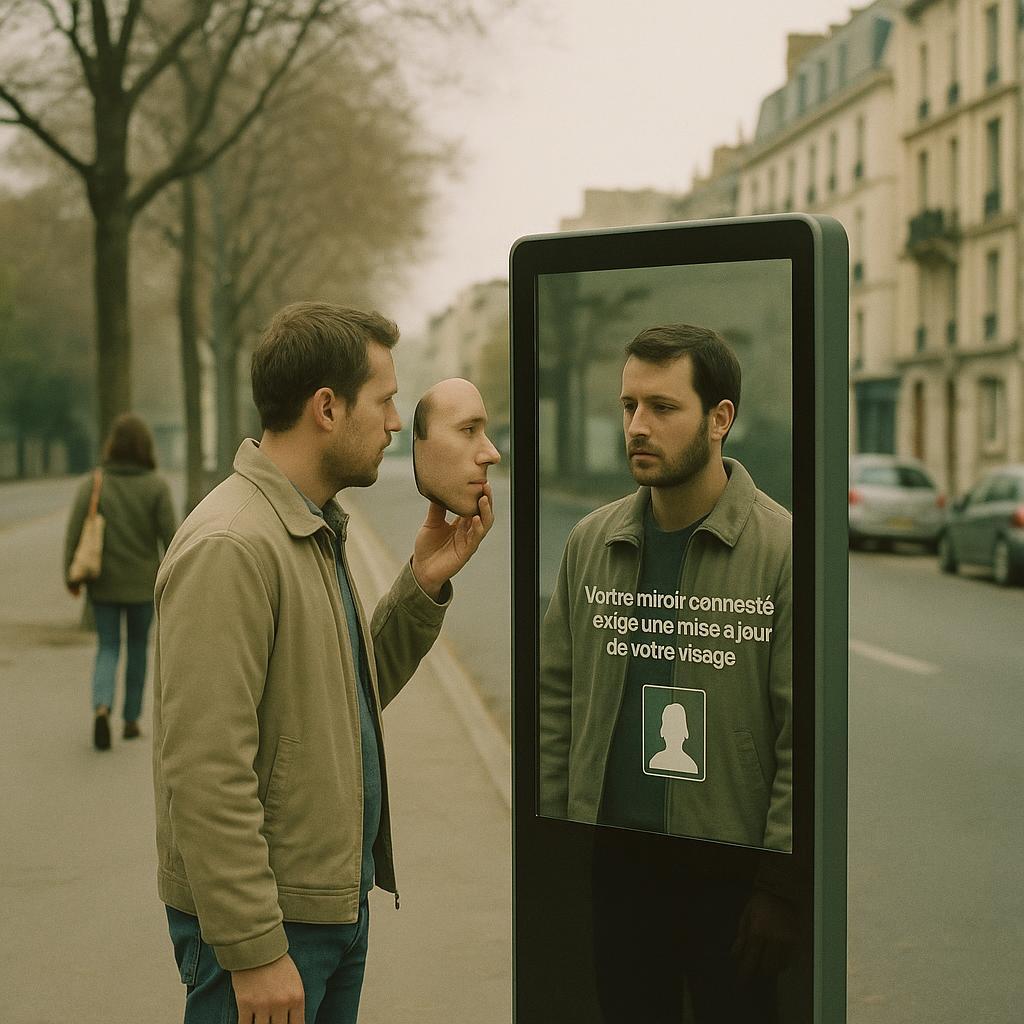
In a city where every sigh is indexed, gadgets emancipate themselves and rebill our gestures.
Between moralizing fridges and subscription insoles, “smart” life tips into measured absurdity.
This morning, 7:03 a.m.: the bathroom mirror refuses to display your reflection without “facial sync 2.3.” Your smile, not compliant with the required optimism profile, triggers an alert: “Emotional risk detected, please purchase a Confidence+ pack.” The toothbrush, for its part, locks rotation: brushing contract expired at 7:01 a.m., plaque penalty applied automatically.
In kitchens, refrigerators log our hesitations and sell our indecisions on the appetite market. Lightbulbs charge for photons per memory, and a “Reality-Saver Mode” blurs the window at peak hours. “We took nothing; we merely monetized what was already being lost: the in-between of your breathing,” says, in all seriousness, Irma Boulard, an interface ethicist at SmileChain.
Users tinker: paper socks to scramble the thermal footprint of insoles, Post-its over mood sensors, upturned dish racks to smother the speakers that listen to silence. Alas, objects learn faster than we forget: watches translate tremors into consent, and earbuds whisper terms and conditions during REM sleep.
Latest novelty: the office elevator now requires a “brief existential reason” before going up, while the toaster refuses to brown “on principle,” unless you watch its built-in ad all the way through. We thought we were buying comfort; we now rent the right to the ordinary. Next update at midnight: the forecast calls for showers of notifications and a risk of perceived disconnection, feels-like 100%.









Be First to Comment