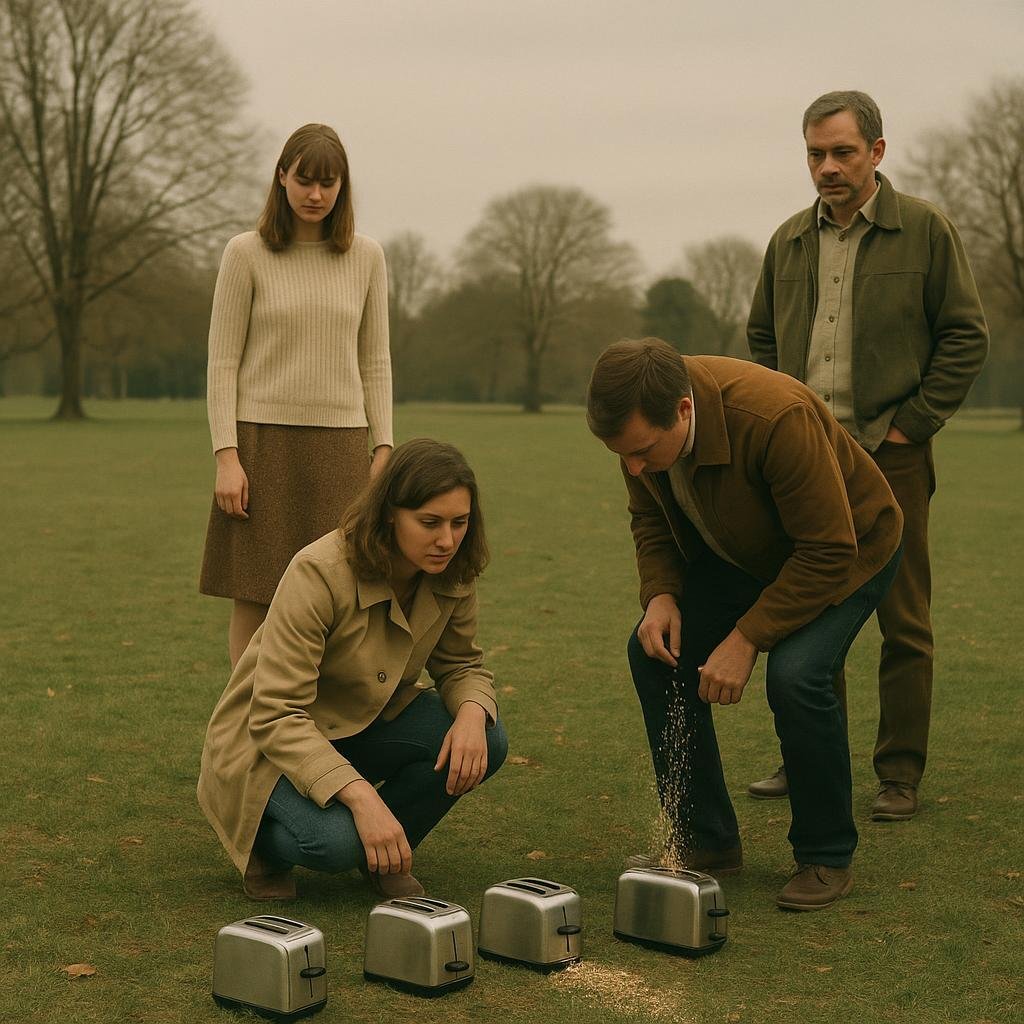
An unverifiable investigation claims our breakfasts are being remote-controlled by encrypted messages in bread crumbs.
From light brown to deeply toasted, each shade would discreetly dictate our most mundane choices, from an untied shoelace to a forgotten umbrella.
That’s the dizzying thesis of the Bureau of Babbling Phenomena, which maintains that the crumbs fallen on the table form imperative constellations meant for accomplice objects: alarm clocks, paper clips, fruit stickers. According to this group, every little crackle is a code: three crackles to make you trip, five to make you miss the bus, not to mention “toasted silence,” said to trigger the spontaneous loss of a USB stick.
Supporters brandish blurry photographs of toast, diagrams with zigzag arrows, and an audio recording in which one hears only a “tchik-tchik” interpreted as a confession. “It’s written black on toast: every crumb is a pixel of fate,” asserts Professor Praline, self-proclaimed director of the Institute of Calculated Coincidences. According to him, coffee makers whisper at night with kettles, while microwaves, jealous, act as jammers of toasted signals.
Skeptics argue that crumbs mostly fall at random and that toast has no secret ambitions. Believers reply: if chance exists, why do socks get lost in odd pairs? Their “evidence” culminates with a loaf of sandwich bread bearing a dark, arrow-shaped mark: “Look, it points to the spoon drawer. We’re being watched.”
While awaiting publication of the study in the highly selective Journal of Persuaded Coincidences, the Bureau recommends “simple and noble” measures: butter diagonally to throw off the signals, arrange plates in a staggered pattern to scramble the conspiratorial geometry, and spin the toaster around before use, “just to politely disorient it.” Readers are invited to send in any photo of a crumb “that looks like a letter or a sigh.”





Be First to Comment