Surprise update to neuro-connected headbands: an idea counter appears and bills every unsponsored thought.
Users discover “Essential Reflection” packs while connected devices demand a paid proof of intent.
Upon waking, millions of users saw, at the top of their field of vision, a small gauge flicker next to the battery icon: “Idea Credit: 5/5.” At the sixth thought — “Where are my keys?” — a chime sounded and a receipt slid into the inbox: “Ordinary idea: €0.03.” In kitchens, smart kettles refuse to heat water without a “declared goal,” toasters demand a validated “crispness intention,” and toothbrushes offer a “thought included” mode at triple the price. The update arrived overnight; in the morning, everyone discovered they were now thinking on credit.
Everyday life immediately reorganized itself. At bus stops, people improvise “mental savings circles” where a single idea is shared out loud for ten people in order to split the bill. On social networks, influencers tout techniques for “slow thinking” at 0.75x to avoid peak-brain surcharges. Others save up their questions for the 2 a.m. to 4 a.m. slot, an off-peak period when introspection is marked down. The first “prepaid idea” cards are being sold by booksellers, who also offer paper notebooks guaranteed “off-cloud” and “non-indexed” pencils, now basic necessities.
The company Synapso, behind the shift, claims to be “protecting” mental health. “We don’t monetize thoughts, we valorize attention. Each micro-purchase is a cognitive caress that prevents distraction,” explains Aurore Meunier, director of Internal Monetization. “Our internal studies show a 98% relaxation rate among testers who stopped thinking as a precaution.” Asked about the Emergency Pause button, now billable, she smiles: “It remains free… for the first two seconds.”
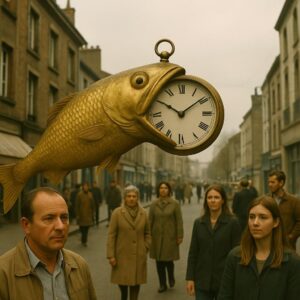
In the shadow of shop windows, a quiet market is taking shape: people trade “refurbished” intuitions, resell barely used ideas with a few metaphysical scratches, and subscribe to “sponsored cogitation playlists” to refill their gauge without direct charges. Fridges ask for proof of inspiration before opening, in the name of “nutritional lucidity,” and connected clocks chop time into “thinkable minutes.” This morning, to save money, parents whisper to their children: “What if we dreamed together, as a family? It’s half price.”





Be First to Comment