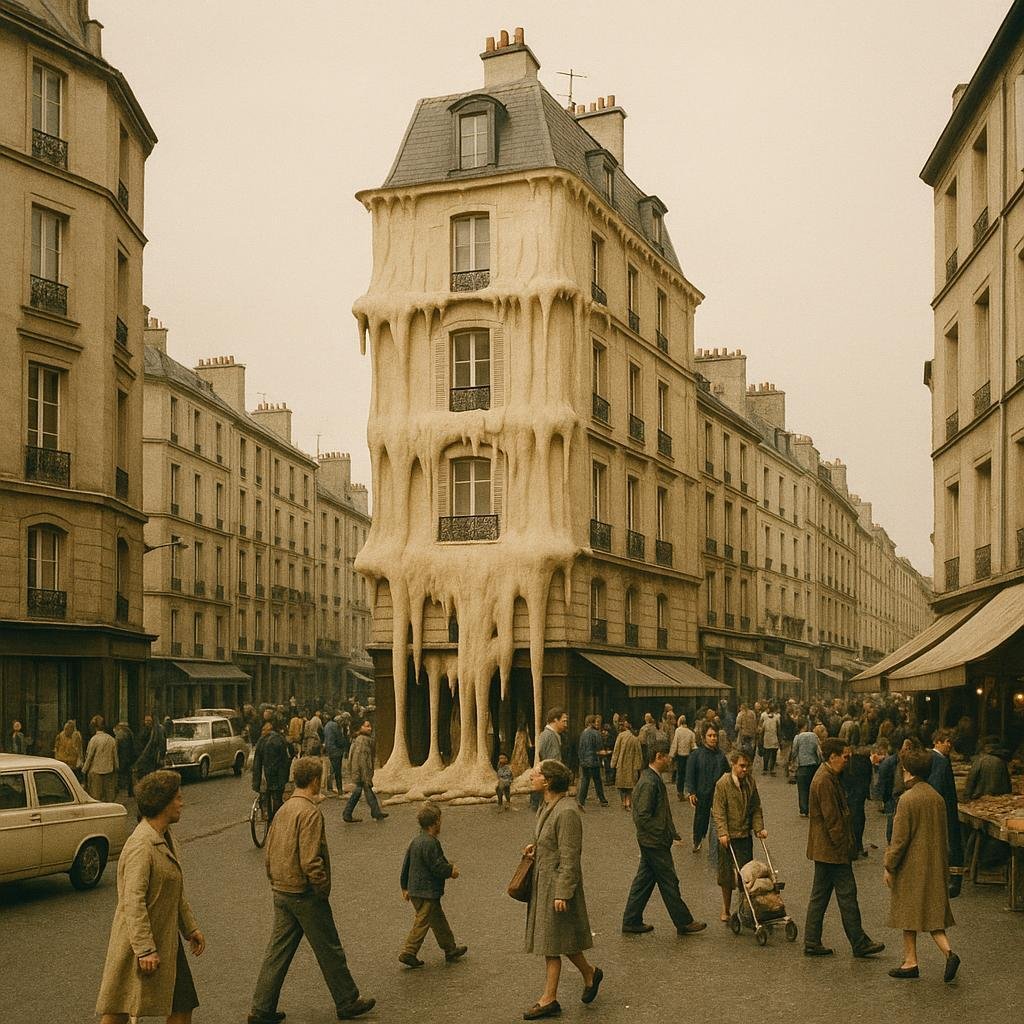
Mirage Avenue found itself draped in tepid hours, folded like sheets at the edge of balconies.
The guardians of sleep advise rolling the minutes into cigars of drizzle to keep them from escaping through the keyholes.
At the first café, the lampposts took aim with crutches of light, propping upright the sidewalk that remembered having been an ocean. Spoons, tired of being solid, were taking a nap on the cups, letting a thread of caramel fall toward the ceiling. A copper snail, patient as stained glass, traced a spiral of dust on the shop window: it was writing the alphabet of syrup. Above, a cloud opened like a drawer and handed out velvet gloves to touch the song of stones.
“I wind the tides with a butterfly comb, and the hour sits of its own accord on my shoulder,” said Marinette du Sable, tide horologist, pinning a laughing second to the lapel of her apron. Her workshop, set down between two sighs, makes clocks that breathe: they exhale Sundays, inhale lacework moons, then yawn an almond scent. According to her, everything is normal: time loves summer, it looks for the window, it melts on the windowsill, then remembers it knows how to swim.
Further on, Siesta Square traded its cobblestones for cushions of polished dust. The statues asked for handkerchiefs to sneeze orchids, and the shop windows for a little ink to repaint the horizon in a sweater. The trams no longer move, but their whistles go on, painted in the air, held up by invisible strings. Announced for tomorrow: a shower of feathers and the opening of the Museum of Evaporated Wednesdays; you must come without a watch, but with some silence jam to spread on the murmur of footsteps.






Be First to Comment