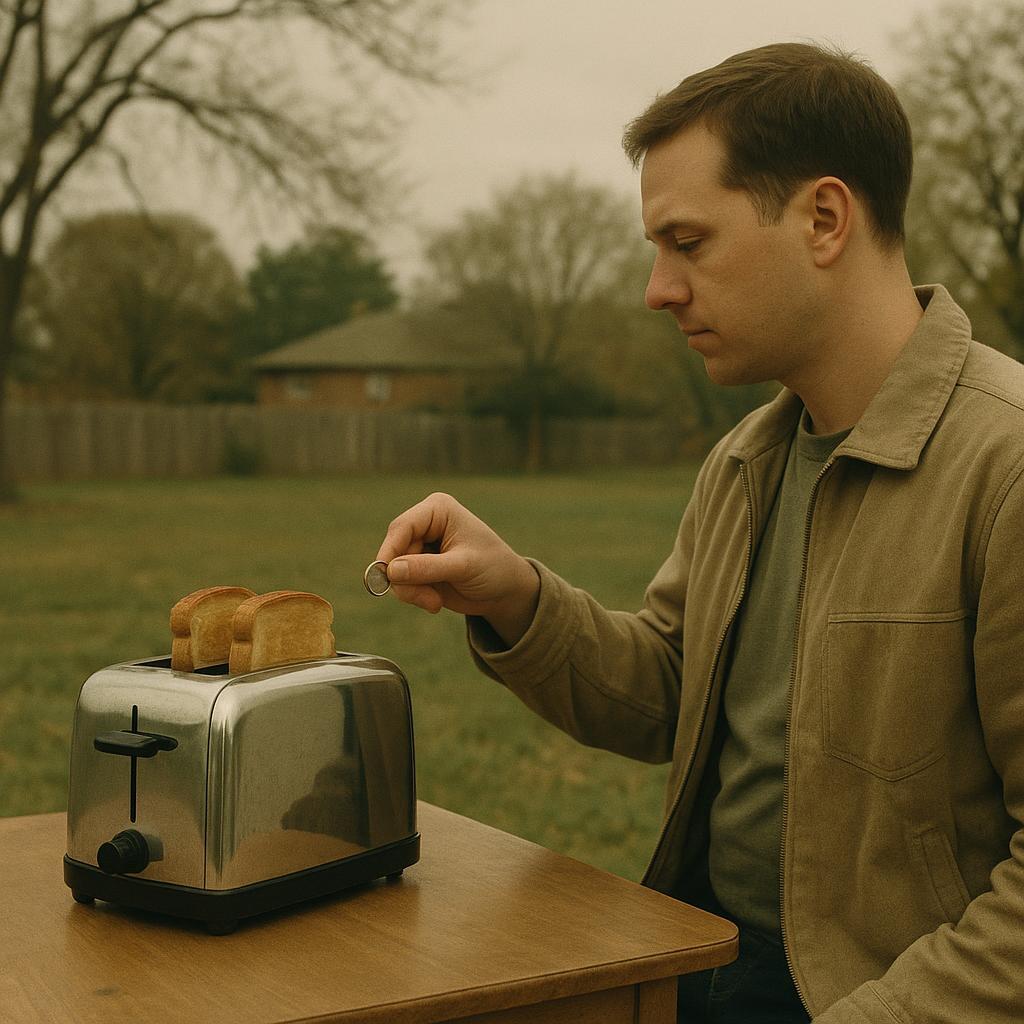
In a world where every object demands its micro-transaction, routine tips into the absurd.
Thousands of households are waking up to appliances turned into micro-toll operators.
Overnight, an update dubbed Mandatory Generosity 2.0 activated “gratitude mode” on all household gadgets. The kettle refuses to heat without a small offering, the smart lock asks for a five-star rating before it opens, and the treadmill bills your steps after the fact, on a sliding scale of exhaustion. On screens, the terms of use lengthen before your eyes, adding clauses as you read them, as if the text itself were trying to outrun us.
Payment pop-ups proliferate: “Continue toasting: €0.29,” “Undo the burn: €0.49,” “Activate nostalgic crust: €1.99 — memory guaranteed.” Fridges, now equipped with a mood sensor, blur their interior light in cases of insufficient enthusiasm. “My refrigerator wrote to me, ‘I sense your skepticism; would you like a more transparent relationship for €2.99 a month?’” protests Nora Vidal, a ceramicist, before conceding: “I paid. I needed a yogurt.”
Platforms insist this “emotion economy” optimizes the user experience by turning every gesture into an opportunity for paid satisfaction. Mirrors offer subscriptions to reflect “the best version of you, with 23% fewer regrets,” while headphones charge for deep silences, with surcharges on sleepless nights. At noon, the first connected breathing app briefly stopped working, reminding its users that “free air offers no guarantee of quality.”
By late afternoon, several manufacturers announced an “Essential Humanity Pack” that promises to aggregate the micro-tolls into a single monthly bill, with a discount on spontaneous bursts of laughter. Early testers report a notable improvement: their objects no longer talk during dreams — except for the alarm clock, which now whispers “Premium Snooze?” at every second saved.









Be First to Comment